
Chronic Venous Insufficiency (CVI)
Vein problems are some of the most widespread chronic health conditions in the U.S. By age 50, nearly 40% of women and 20% of men have serious leg vein problems. A common concern is varicose veins. This condition happens when veins in the legs and feet become enlarged and twisted. CVI happens when the valves of the veins do not function properly. This causes an issue with the blood circulation in the legs.
What is the cause of CVI?
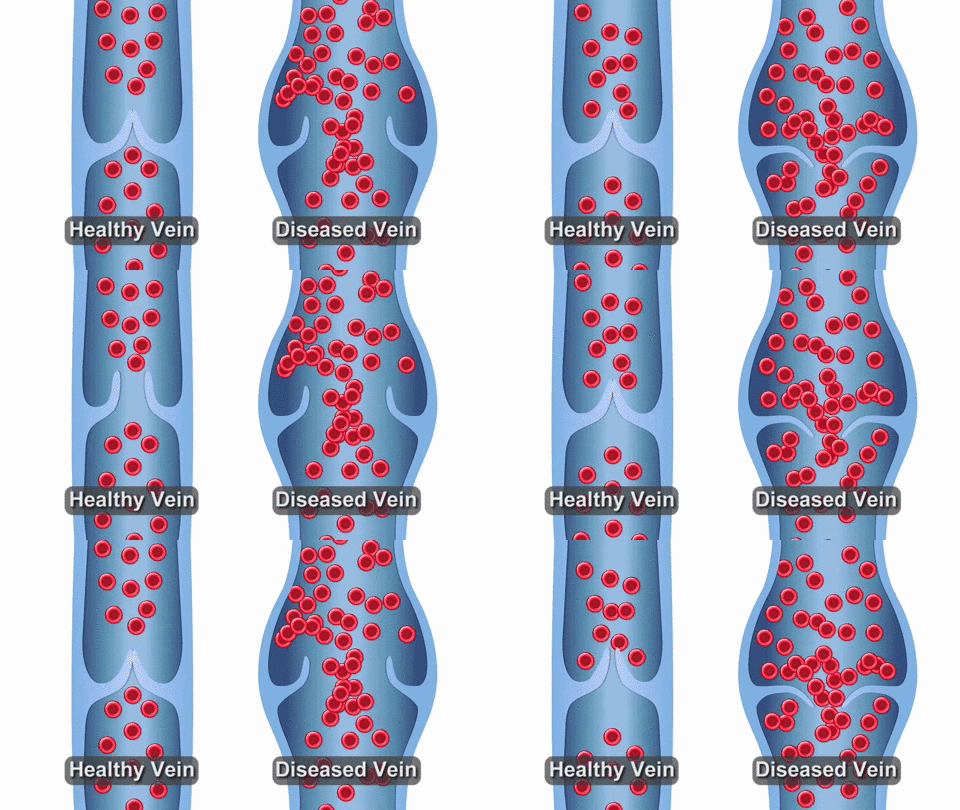 CVI is caused by vein valves that do not function properly. Vein valves are
designed to allow blood to flow against gravity from the legs back to the
heart. In other words, they are supposed to prevent a backflow of blood.
Vein valves may fail to work due to ;
CVI is caused by vein valves that do not function properly. Vein valves are
designed to allow blood to flow against gravity from the legs back to the
heart. In other words, they are supposed to prevent a backflow of blood.
Vein valves may fail to work due to ;
When valves do not work properly it can cause a build-up of blood pressure in the leg, leading to high blood pressure in the veins. This may result in veins to enlarge.
When the valves don’t close properly, the blood doesn’t flow back to the heart as it should, blood flows backwards, what we call venous reflux or “leaky veins”, and this causes pressure on the wall of the vein and results in bulging veins. Over time, the backwards flow causes heaviness, swelling and pain that progresses over time. Without treatment, CVI symptoms may become more advanced or complicated.
What are the risk factors of Chronic venous insufficiency?
Family History of CVD
Increasing age > 50
One or more blood clot in superficial or deep veins
Multiple pregnancies.
Obesity
Prolonged standing or sitting.
Heavy lifting
Sedentary life style or limited physical activity.
Smoking
The worst cases of varicose veins may cause bleeding from varicose veins
and blood clots in the veins near the surface of the skin (thrombophlebitis).
This is an urgent problem and needs medical attention immediately.
What are the symptoms of CVI?
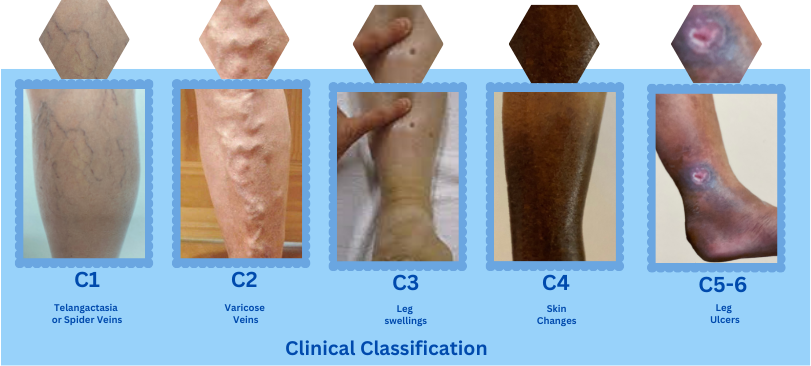
Ankle and/or leg swellings
Skin changes in lower leg:
Discoloration
Eczema
Scaring or thickening
Sores or ulcerations
Aching or heaviness
Leg tiredness
Pain or throbbing
Burning or itching
Muscle cramping.
Restless legs
How to diagnose chronic venous insufficiency (CVI) or related conditions?
Diagnoses include performing comprehensive medical history and physical examination. May recommend complete urine tests, blood tests, cardiac screening, vascular ultrasounds, or other imaging procedures to make a final diagnosis and develop an effective treatment plan.
What are common treatment of Chronic Venous Insufficiency (CVI) or related conditions?
Ways to reduce your risk of developing chronic venous insufficiency (cvi) or related disorders include elevating your legs, smoking cessation, eating nutritious foods, exercising regularly, and maintaining a healthy body weight.
A: Healthy life style modification and conservative measures:
Watchful waiting
Dietary changes
Medications
Healthy weight management
Exercise regularly
Smoking cessation
Compression stockings
Properly control your blood pressure, blood cholesterol, and blood sugar
B: Minimally invasive interventions:
Radiofrequency ablation
Sclerotherapy
ClariVein®
VenaSeal™
Laser vein treatment
VeinRx specialist can customize each treatment plan based on your needs, to reduce to risk of complication and improve outcome.
If you are dealing with Chronic Venous Insufficiency (CVI), VeinRx sounds like a place that prioritize personalized care. Call VeinRx or book online for consultation.
Are you experiencing these symptoms?